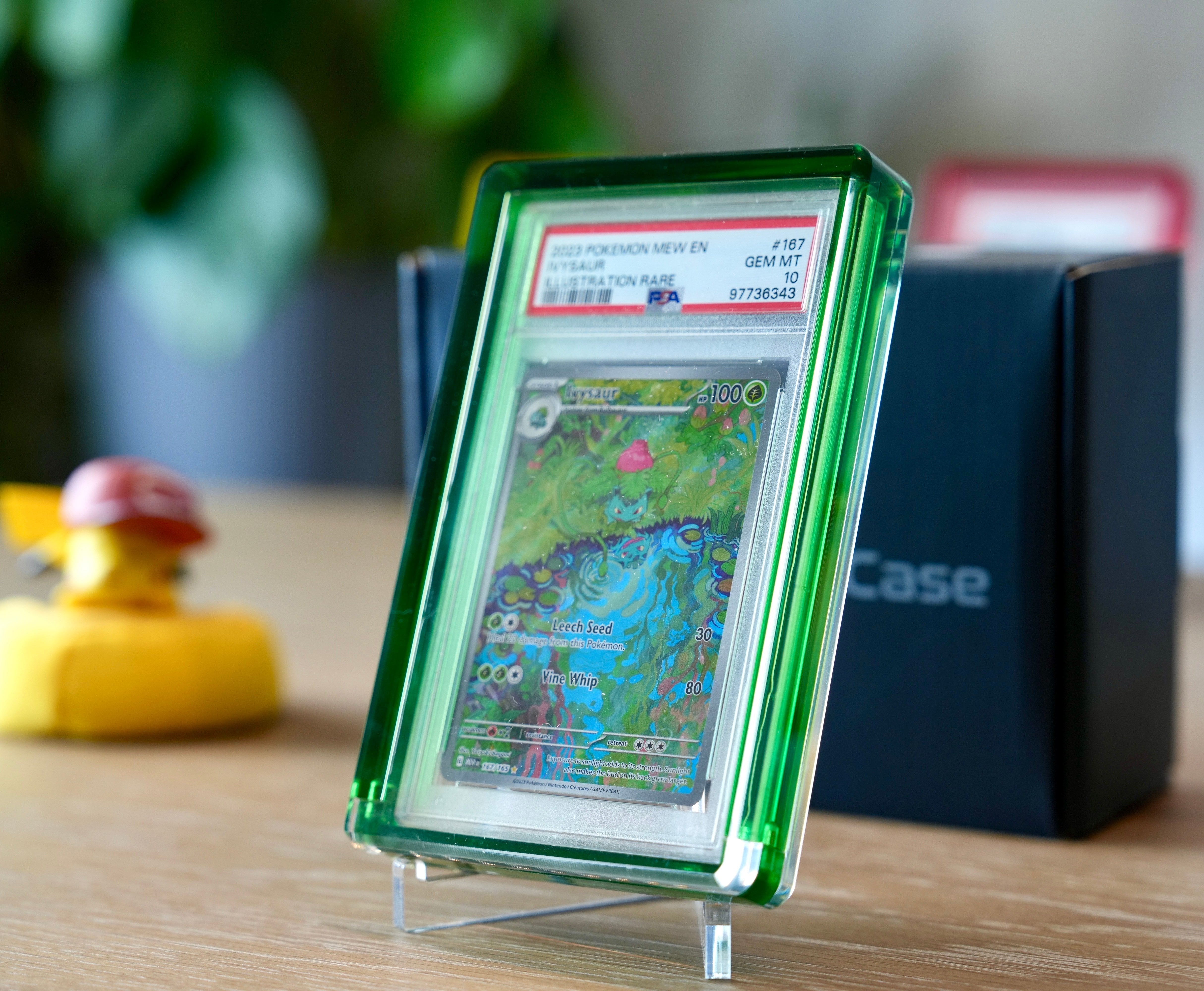
You just invested in a high-quality, UV-protected case to keep your prized possessions safe from fading. Naturally, you want to make sure it works! So, you grab a black light flashlight, shine it directly at the case, and wait a minute. A reflective logo is glowing, or maybe something inside faintly lights up.
Does this mean your case has zero UV protection? It is a completely understandable concern, and it happens to collectors all the time. However, you don't need to panic.
The short answer is: No, the "black light test" is not an accurate indicator of UV protection. Here is a breakdown of the science behind why this popular DIY experiment is flawed, and why you can trust professional testing instead.
1. Surface Fluorescence vs. UV Penetration
When you shine a black light on your case and see a logo glowing on the outside, it doesn't mean UV rays are passing through. It simply means the ink or material on the surface contains phosphors. Phosphors are materials that absorb UV light and immediately re-emit it as visible light (that classic neon glow).
UV protection is about stopping harmful light from passing through the acrylic or glass barrier to the inside. A surface reaction on the outside of the case has absolutely no impact on the protective barrier keeping your contents safe.
2. The Reality of a 98% to 99% Block Rate
Professional, high-quality cases are often rated to block the vast majority of harmful UV rays. That is an exceptional level of protection, but 98% or 99% is not 100%.
Black light flashlights emit a highly intense, concentrated beam of UVA light. If you blast this intense beam directly at a case in a dark room, the 1%-2% of light that does manage to pass through is sometimes still enough to trigger a faint glow on highly reactive materials inside (like neon colors or white paper). Seeing a faint glow doesn't mean the protection is failing; it just means a tiny sliver of a massively concentrated beam made it through. Everyday ambient sunlight will not hit your items with that level of targeted, focused intensity.
3. Wavelength Differences
Ultraviolet light is a wide spectrum, and not all UV rays are the same.
• Black lights typically emit a very specific, narrow band of long-wave UVA light (usually around 365–395 nanometers).
• Harmful sunlight contains a broader spectrum of degrading rays, including both UVA and UVB.
A display case is engineered to effectively block the vast majority of the broad-spectrum rays that cause severe fading and degradation. It might still let a tiny fraction of a black light's specific, narrow wavelength through, but that doesn't mean the broad-spectrum protection is compromised.
Trust the Science, Not the Flashlight
So, how do we know a case is actually protecting your items?
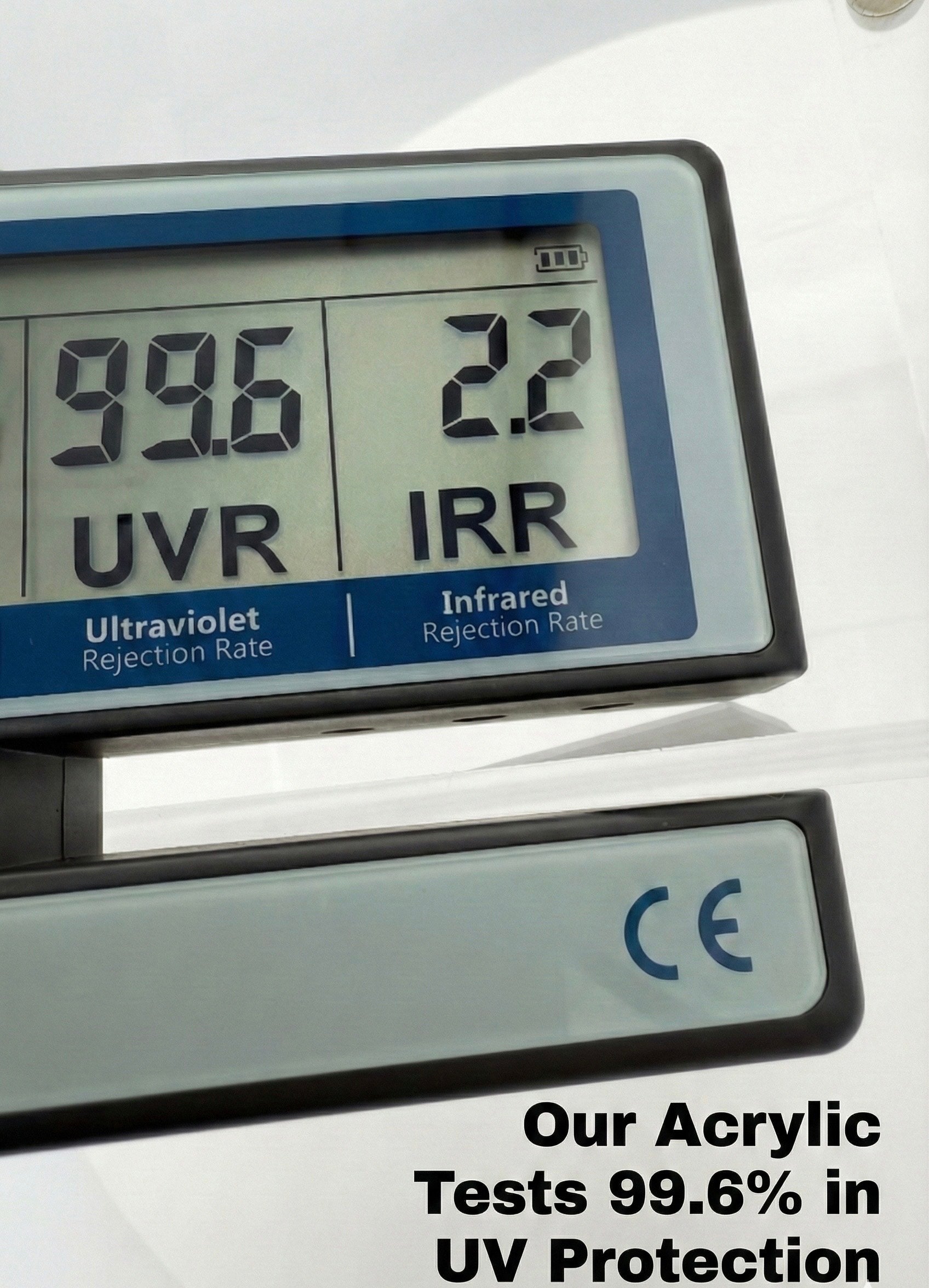
Instead of relying on the human eye looking for a secondary chemical reaction (fluorescence), professionals use dedicated UV testers and spectrophotometers. These calibrated devices don't just look for a glow; they actually count the photons of light trying to pass through the material.
When a professional UV tester reads a 98%-99% block rate, it means the material is doing exactly what it was designed to do: creating a heavy-duty barrier against the vast majority of ultraviolet radiation.
The Bottom Line: If your case is rated for high UV protection by professional standards, you can rest easy. Your collection is well-protected, regardless of what a high-powered flashlight might make you think!